


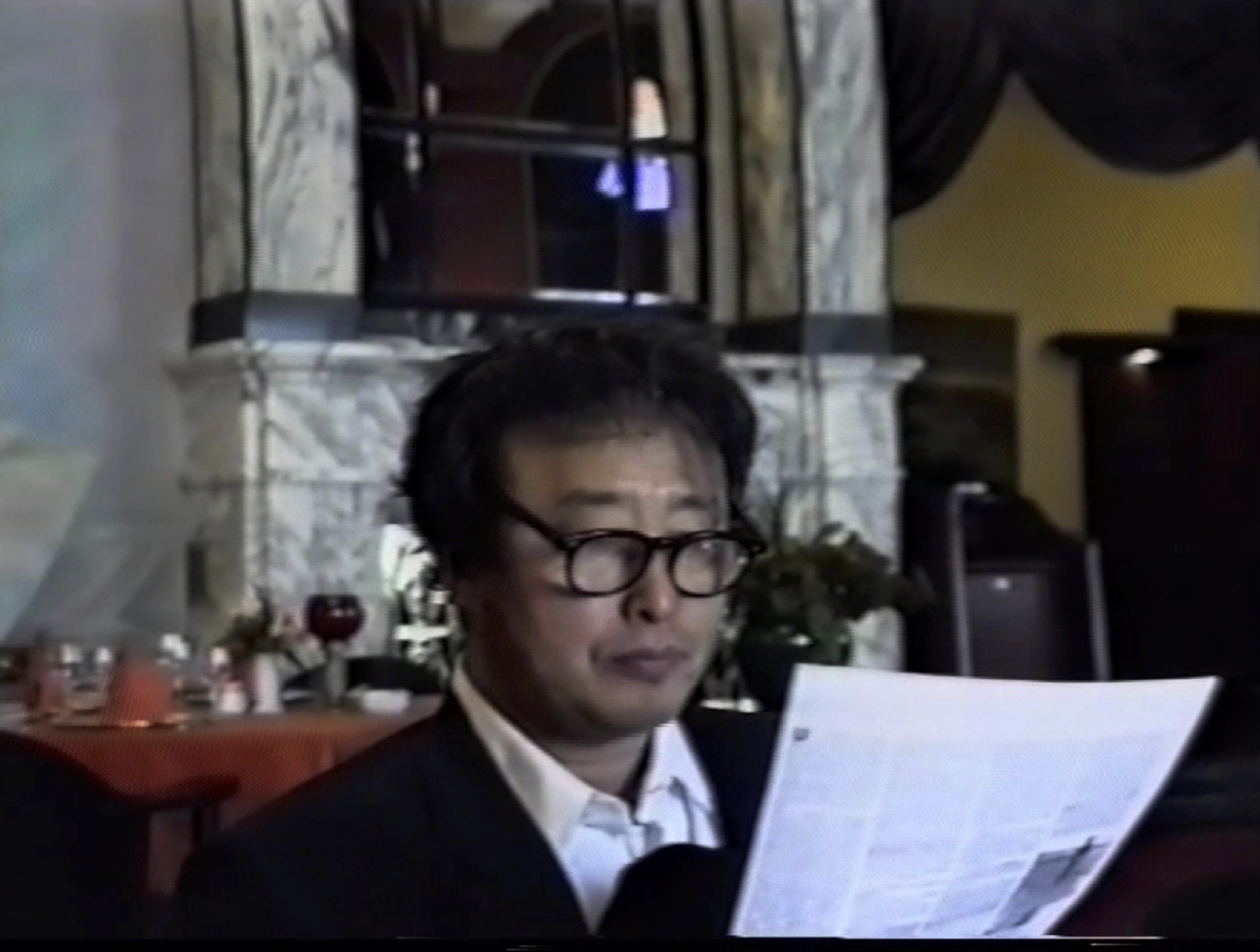
Dalibor Martinis, Sanja Iveković, Interview with Paik in Zagreb, 1993
Artists : Aleksandar Srnec, Andreja Kulunčić, Dalibor Martinis, Dan Oki, Darko Fritz, Goran Trbuljak, Ivan Ladislav Galeta, Ivan Marušić Klif, Ivan Picelj, Katalin Ladik, Koloman Novak, Marina Abramović, Sandra Sterle, Sanja Iveković, Tomo Savić-Gecan, Vladimir Bonačić
The Nam June Paik Art Center opens its doors in 2026 with the exhibition Circuits of Chance. The exhibition has been realized through the longstanding collaboration between the Nam June Paik Art Center and the Museum of Contemporary Art Zagreb. It introduces the work of artists primarily from Croatia and explores the points of resonance with Nam June Paik’s art. While Paik's and Croatian art originate from different places, they unexpectedly resonate, creating new networks and forming a space for feedback.
The “New Tendencies” movement, introduced for the first time in Korea, serves as the starting point for this exhibition. Emerging in the early 1960s, New Tendencies (NT, 1961–1973) developed into a dynamic international network of advanced artistic theories and practices. Beginning with the deconstruction of traditional art and bold experimentation with new media, New Tendencies emphasized active audience participation, defined art as a form of “research,” and embraced technological progress with striking optimism. Originating in Zagreb, which briefly became one of Europe’s most dynamic centers for media and early computer art, the movement brought together artists, theorists, and engineers from all around the world in a unique spirit of collaboration. Expanding artistic methodology through the use of computers and algorithms, New Tendencies laid the conceptual and technological groundwork for what we now recognize as media art.
A subsequent and particularly formative phase of media art unfolds through the experimental video practices of the 1970s and 1980s. In this period, artists articulated new relationships between video, performance, and the body. Working at the intersection of technology, temporality, and live art, these artists expanded the expressive and critical potential of the moving image, while actively redefining modes of spectatorship and audience engagement. The transition into the 1990s coincided with the violent breakup of Yugoslavia, as war, collective trauma, and economic collapse reshaped the social and cultural landscape of the region. These conditions prompted a new generation of Croatian artists to pursue their studies abroad, where they encountered different institutional frameworks, artistic languages, and critical discourses. Their exposure to advanced infrastructures, interdisciplinary approaches, and critical media practices proved formative, and they significantly contributed to the development and international positioning of new media art in Croatia. They focused on the question, “How do viewers see and perceive?” By making active use of video’s unique technical qualities—such as repetition, rewinding, and split screens—they presented entirely new visual experiences. Since the 2000s, contemporary art in Croatia has searched for new sensibilities in the digital environment. These works sustain an ongoing relationship with the viewer, showing that an artwork is not a fixed object but a living system that changes with time and data.
Thus, the exhibition traces the broad currents of art while seeking points of convergence between Nam June Paik and Croatian media art. During the period of New Tendencies, these convergences appear as parallel explorations rather than direct contact, shaped by a shared interest in technology, systems, and the redefinition of the artwork and its audience. From the late 1970s onward, these affinities develop into influential personal encounters and exchanges, notably through interviews. For later generations, his already-established career becomes a source of admiration and reference, extending these chance intersections into lasting networks of artistic relations. Across these temporal layers—from parallel beginnings, through direct exchange, to inherited influence—the exhibition reveals how experimentation with technology, engagement with the viewer, and openness to chance encounters generate expanding networks of artistic relations and ongoing possibilities.
-
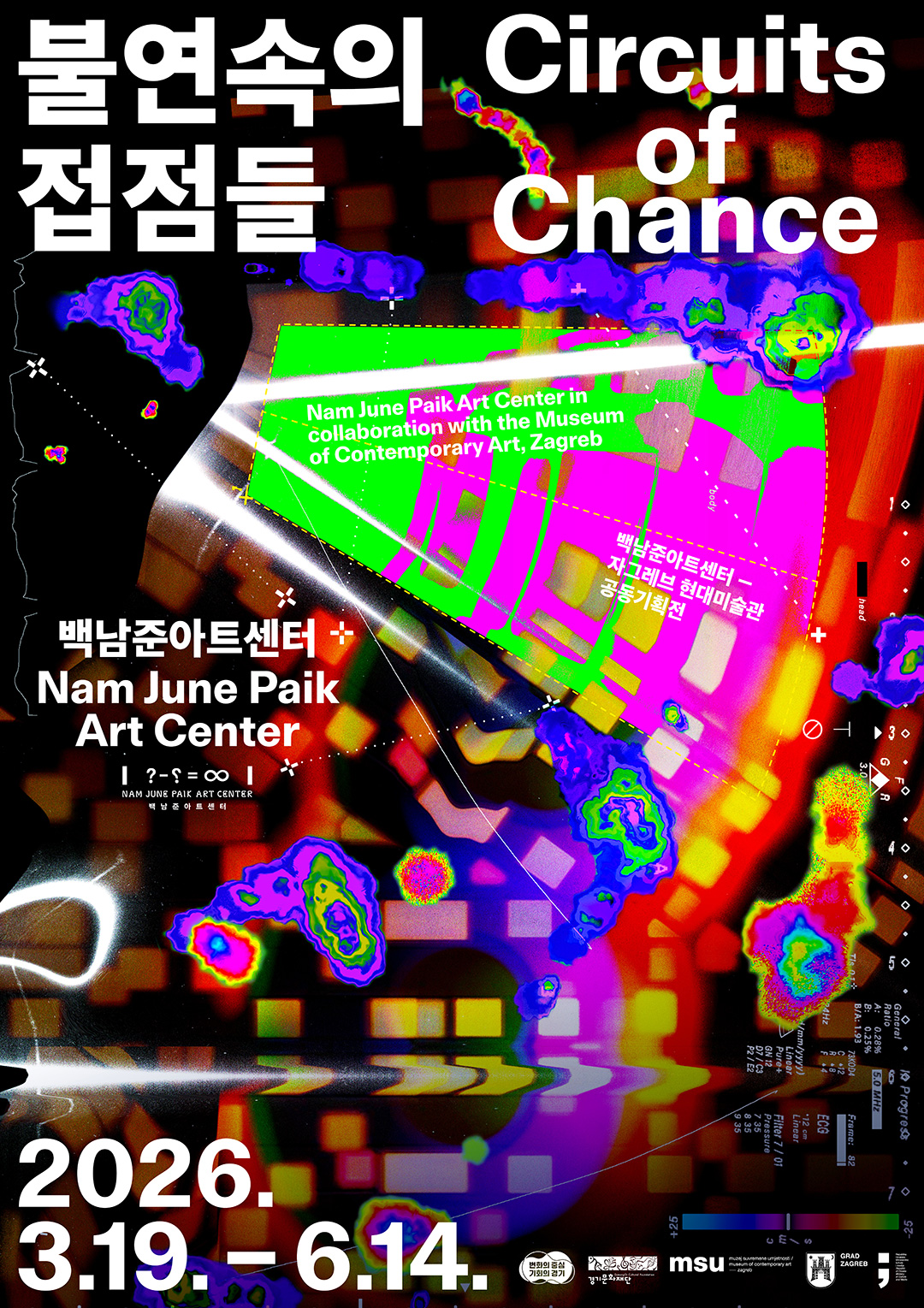
Circuits of Chance
Circuits of Chance